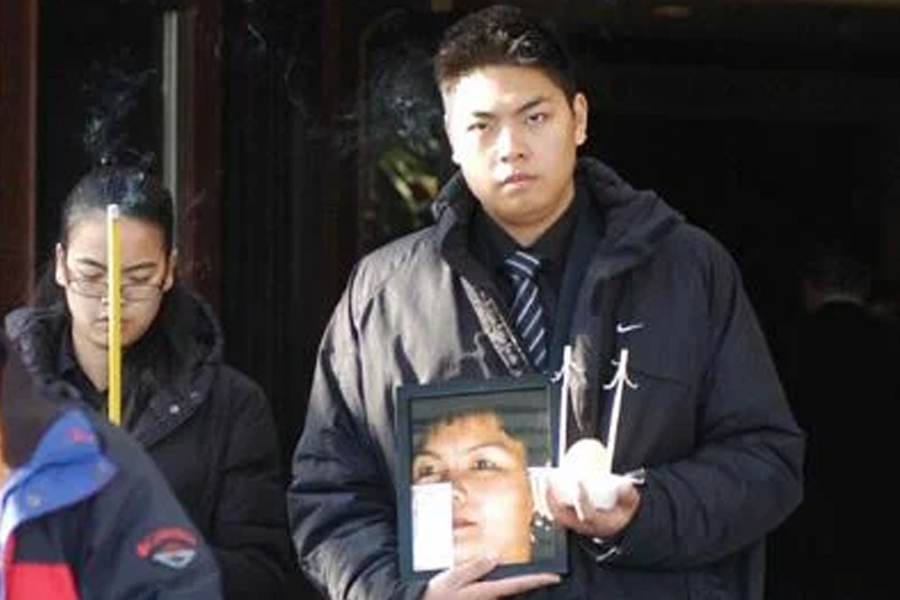
Basic Information
| Field | Details |
|---|---|
| Full name | Hann Pan (sometimes referenced as Huei Hann Pan) |
| Born | circa 1950s–early 1950s (Vietnam) |
| Ethnic background | Hoa (ethnic Chinese community in Vietnam) |
| Immigration | Arrived in Canada as a refugee in 1979 |
| Occupation | Tool-and-die maker (Magna International); manufacturing sector |
| Residence (notable) | Scarborough; later Markham, Ontario |
| Family | Spouse: Bich Ha Pan (deceased 2010); Children: Jennifer (b.1986), Felix (b.1989); earlier child Max (deceased shortly after birth) |
| Major life event | Victim of a violent home invasion in November 2010 that left his wife dead and himself severely injured |
| Legal/Case status (family) | Daughter convicted in 2014 of murder and attempted murder; retrial for murder ordered in 2023 and upheld in 2025; attempted murder conviction remains in force |
Life in outline: immigrant, craftsman, provider
Hann Pan’s life is a study in quiet industry. Born and educated in Vietnam as part of the Hoa community, he left for Canada in 1979 amid the waves of political refugees and, like many new arrivals, set himself to work. He found a skilled trade as a tool-and-die maker at an automotive supplier, a practical craft that anchors factories and keeps machines moving. He and his wife, Bich Ha, saved methodically, bought a home in Markham by the mid-2000s, and accumulated modest assets — luxury vehicles, savings in the mid-six figures by some accounts — that together painted a portrait of immigrant upward mobility.
This was not a life of public acclaim. It was domestic and material: steady wages, overtime, the routines of a working family. Hann’s achievements were the kind that show up in ledgers and property deeds rather than in headlines — a brownstone or suburban house paid off, a reliable car, children enrolled in piano and skating lessons because that was what parents who had arrived with little could now offer.
Family dynamics: strict care, high expectations
Within the home, Hann projected the archetype often described as a “tiger parent”: strict, demanding, and single-minded about education and accomplishment. Music lessons, figure skating, monitored schedules, limited leisure — these were the contours of his parenting. Bich Ha, his wife, worked alongside him occasionally and helped enforce household rules, while also shouldering the emotional labor of family life.
Tensions simmered beneath the polished surface. Jennifer, the elder child born in 1986, chafed under restrictions and constructed a web of deceptions about school, work, and relationships. Felix, born in 1989, later testified in open court about the rupture between sister and parents and sought a legal no-contact order after the family’s public collapse. The family, outwardly financially secure, contained fault lines of expectation and secrecy that would, tragically, explode into violence.
The 2010 attack: wounds that reverberate
On November 8, 2010, intruders entered the Pan family home and carried out an attack that would shatter the family physically and emotionally. Bich Ha was killed. Hann survived but suffered grievous injuries — including loss of vision in one eye, ongoing chronic pain, and lasting psychological trauma: anxiety, insomnia, nightmares, and depression. He missed his wife’s funeral while hospitalized and emerged into a vastly altered life: blind in one eye, unable to return to his former job, and reliant on relatives for day-to-day support.
The violence ripped aside the domestic scaffolding Hann had built. The house that once marked success became a crime scene with legal and social aftershocks that would follow the family for years.
Aftermath, legal fallout, and family estrangement
Investigations eventually led to the family itself. In 2014, Jennifer Pan was convicted of first-degree murder for her mother’s death and of attempted murder for the attack on her father; she was sentenced to life in prison with parole eligibility after 25 years. The sentence and the facts that emerged during trial — including a picture of elaborate deception and solicitation — reframed the family story from one of immigrant steadiness to a canvas of betrayal.
Notably, legal developments have continued: higher courts ordered a retrial for the first-degree murder charge in 2023, a decision later upheld in 2025, while the attempted murder conviction against Jennifer remains intact. Felix and Hann obtained lifetime no-contact protection, formally severing communication with Jennifer. Public and private grief remain entangled: Hann issued a victim-impact statement describing his profound loss, saying that when he lost his wife he “lost [his] daughter at the same time,” and expressing a hope that Jennifer might one day change.
Work, money, and the cost of violence
Professionally, Hann’s trade at Magna International represented both identity and stability; tool-and-die work is skilled, demanding, and well compensated relative to unskilled labor. By the mid-2000s the family had assets that suggested solid middle-class status: homeownership in Markham, two luxury vehicles, and roughly $200,000 in savings in some accounts. Those facts often featured in public retellings to underscore what was lost — not only a person, but a materially secure life.
The 2010 attack changed that calculus. Severe injuries prevented Hann from returning to manufacturing work; chronic pain and mental-health struggles necessitated ongoing care. Legal complexities around the family property and its association with the crime further constrained options; the house in which the murder occurred became difficult to sell. In other words, the violence imposed both human and financial scarring, with consequences that unfolded over years.
Public profile and contemporary visibility
Hann Pan is not a public figure by inclination. Since 2010 he has maintained a low profile, living privately with relatives and rarely speaking to press beyond legal proceedings. Public attention towards him now is mostly case-related: courtroom updates, appeals, retrial schedules, and periodic documentary revivals that bring the family story back into public view. A documentary and renewed media coverage in the 2020s rekindled interest, but did not materially alter Hann’s private life.
Social media references to him are sparse and largely tangential; there is no active personal social-media presence. Most contemporary mentions place him within the legal narrative: victim, survivor, estranged father. He remains, above all, a figure whose life was radically altered by a single violent event.
Timeline of key dates
| Year | Event |
|---|---|
| 1979 | Immigrated to Canada as a refugee |
| 1986 | Daughter Jennifer Pan born |
| 1989 | Son Felix Pan born |
| Mid-2000s | Family assets include Markham home and reported savings (~$200,000) |
| Nov 8, 2010 | Home invasion: Bich Ha Pan killed; Hann severely injured |
| 2014 | Jennifer Pan convicted of first-degree murder and attempted murder; sentenced to life with parole ineligibility for 25 years |
| May 2023 | Court of Appeal orders retrial on first-degree murder charge |
| April 2025 | Supreme Court upholds order for retrial on murder charge; attempted murder conviction remains |
FAQ
Who is Hann Pan?
Hann Pan is a Vietnamese-born former tool-and-die maker who emigrated to Canada in 1979 and built a working-class life in Ontario before becoming the victim of a violent home invasion in 2010.
What happened to his wife?
His wife, Bich Ha Pan, was killed during the 2010 home invasion and did not survive the attack.
What injuries did Hann sustain?
He suffered severe injuries including blindness in one eye, chronic pain, and long-term psychological effects such as anxiety and insomnia.
What is known about his children?
His daughter Jennifer was convicted of murder and attempted murder in 2014 and is serving a life sentence, while his son Felix testified against their sister and has sought no-contact protection.
Did the family have financial stability before the attack?
Yes; the family had achieved middle-class stability with homeownership, luxury vehicles, and reported savings that reflected prudent financial management.
Is there ongoing legal action?
Yes; a retrial for the murder charge was ordered in 2023 and upheld in 2025, while the attempted murder conviction stands and family no-contact orders remain in place.
Does Hann have a public presence or social media?
No; Hann maintains a very low public profile, living privately with relatives and rarely appearing in media apart from court and case-related reporting.
How does Hann describe the aftermath?
In victim-impact statements and interviews, he has described profound loss and estrangement, saying that losing his wife felt like losing his daughter as well, and expressing hope for personal change despite deep wounds.