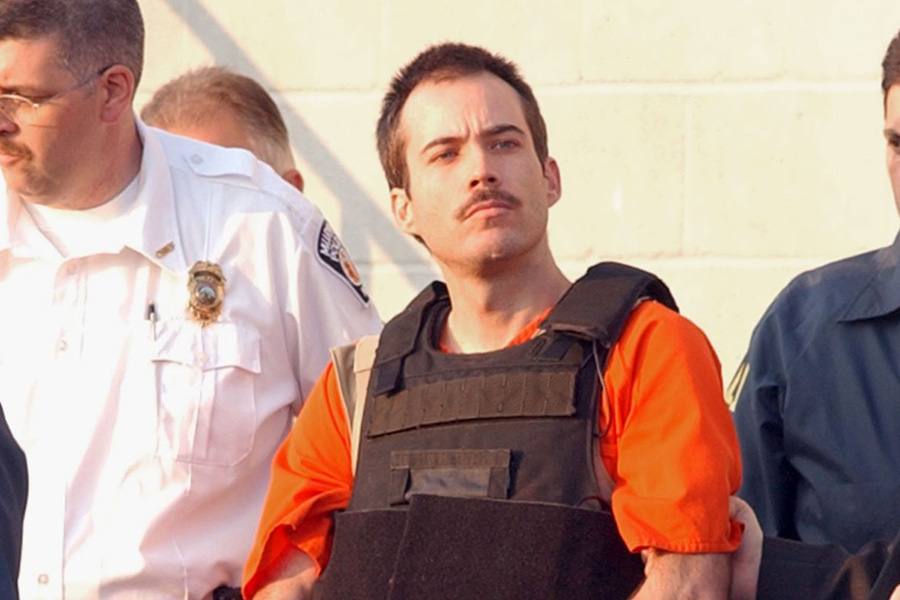
Basic Information
| Field | Detail |
|---|---|
| Full name | Eric Robert Rudolph |
| Date of birth | September 19, 1966 |
| Place of birth | Merritt Island, Florida |
| Notable crimes | Series of bombings (1996–1998), including Centennial Olympic Park and a 1998 Birmingham abortion-clinic bombing |
| Capture | May 31, 2003 (Murphy, North Carolina) |
| Legal outcome | Pleaded guilty in 2005; four consecutive life sentences without parole |
| Current incarceration | Federal supermax facility (ADX Florence) |
| Public profile notes | Linked with white-supremacist and Christian Identity–aligned circles; was on the FBI Ten Most Wanted list in 1998 |
Background, family, and formative years
Eric Robert Rudolph’s life reads like a study in stark contrasts: a laborer who learned to roof and frame, a soldier who left the Army in 1989, and a man who later embraced violent, extremist ideology. His early schooling ended after ninth grade; he later obtained a GED and worked as a carpenter and handyman alongside older brothers. This practical, hands-on existence coexisted uneasily with ideological currents that would harden into something far darker.
Family dynamics were significant and turbulent. The household headed by Robert Rudolph (father) and Patricia Rudolph (mother) fractured in ways that commentators and investigators later noted as formative for Eric. Patricia’s influence has been described as pivotal; accounts indicate that the family spent time at a compound associated with Christian Identity beliefs during the 1980s, a period that likely reinforced extremist interpretations of religion and politics. The death of Robert Rudolph in 1981 precipitated a relocation and added stressors that shaped the family’s later public presence.
Below is a concise listing of immediate family members most often referenced in public reporting:
| Family member | Brief introduction |
|---|---|
| Robert Rudolph (father) | Died 1981; his death and its aftermath affected the family’s trajectory. |
| Patricia Rudolph (mother) | Central figure in family history; associated with time spent at a Christian Identity–linked compound in the 1980s. |
| Daniel Rudolph (older brother) | Worked with Eric; in 1998 he made a widely publicized act of self-mutilation on camera as a dramatic plea during the manhunt. |
| Joel Rudolph (brother) | Mentioned in family interviews; relatives have spoken to press about domestic tensions and background. |
| Maura Rudolph (sister) | Appears in profiles and interviews as part of the immediate family circle. |
| Jamie Rudolph (brother, sometimes listed) | Occasionally included in secondary listings of siblings; public reporting on sibling roster varies. |
Family recollections, interviews, and contemporary reporting reveal fractures — contradictory statements, dramatic public gestures, and a pattern of secrecy and recrimination. Those fractures, more than a single cause, form the context in which Eric Rudolph’s later acts took shape.
Crimes, manhunt, prosecution, and sentence
Between 1996 and 1998 a sequence of bombings across the southeastern United States left a trail of death, injury, and fear. The most visible and internationally resonant attack was the bombing at Centennial Olympic Park during the 1996 Atlanta Olympic Games; other attacks included bombings at abortion clinics and a nightclub, with the 1998 Birmingham clinic bombing resulting in the death of an off-duty police officer.
Law enforcement labeled the string of incidents domestic terrorism. The investigation grew into one of the largest manhunts in U.S. history. Rudolph was placed on the FBI Ten Most Wanted list in 1998 and remained a fugitive for years, surviving in rural and wooded areas by living off the land and avoiding detection. His capture came on May 31, 2003, in Murphy, North Carolina, when an observant local saw him rummaging and law enforcement moved in.
In 2005 Rudolph entered a plea agreement to avoid the death penalty, admitting guilt to multiple counts; he was sentenced to four consecutive life terms without the possibility of parole and transferred to the federal supermax facility ADX Florence, where he serves his sentence under the strictest security protocols.
Key dates and numbers
| Date | Event |
|---|---|
| September 19, 1966 | Eric Robert Rudolph born |
| 1989 | Discharged from U.S. Army (approximate, following training and service) |
| 1996 | Centennial Olympic Park bombing (Atlanta) |
| 1998 | Birmingham abortion-clinic bombing (fatalities occurred) |
| 1998 | Added to FBI Ten Most Wanted list |
| May 31, 2003 | Arrested in Murphy, North Carolina |
| April–July 2005 | Plea and sentencing; four consecutive life sentences imposed |
Ideology, motive, and public perception
Rudolph’s actions were not random acts of violence but were framed by him and investigators as ideologically motivated — rooted in an extreme interpretation of Christian Identity theology and connected to broader anti-government, anti-abortion, and white-supremacist currents. Public perception of Rudolph has shifted across time: initially shock and outrage, then years of media fascination with the manhunt, and subsequently analysis in retrospectives that place the case in the context of domestic terrorism, lone-wolf actors, and the challenges of early detection.
His case highlights how isolated individuals can fuse personal grievance with extremist doctrine and take steps that cause catastrophic harm. The manhunt and capture became a study in persistence, local vigilance, and interagency cooperation.
Financials and publications
There is no credible public estimate of Rudolph’s net worth. As a federal inmate serving life sentences, his financial footprint is minimal in traditional terms. Reporting has noted isolated attempts to publish material from prison and references to restitution actions, but these remain procedural and modest relative to the human toll of his crimes. There is no evidence of large assets, corporate holdings, or significant independent wealth connected to him.
Recent mentions and cultural echoes
The Rudolph story continues to surface in media retrospectives, true-crime podcasts, legal filings, and the occasional documentary or dramatized portrayal. Anniversaries of the attacks and broader conversations about domestic extremism rekindle interest in the case, and court documents filed years after sentimentally and legally revisit parts of the prosecution and appeals process. The case remains a touchstone when journalists and scholars examine how ideology, family dynamics, and personal grievance can collide in lethal ways.
FAQ
When was Eric Robert Rudolph born?
He was born on September 19, 1966.
What crimes was he convicted of?
He pleaded guilty to multiple bombings between 1996 and 1998, including the Centennial Olympic Park bombing and a fatal 1998 Birmingham clinic bombing.
When was he captured?
He was captured on May 31, 2003, in Murphy, North Carolina.
What sentence did he receive?
He received four consecutive life sentences without the possibility of parole.
Where is he incarcerated?
He is held at the federal supermax facility ADX Florence.
Did his family influence his beliefs?
Public accounts indicate that family circumstances and time spent around Christian Identity-aligned communities influenced his ideological development, though causation cannot be reduced to a single factor.